VALORANT Champions Shanghai Group Stage Day 7
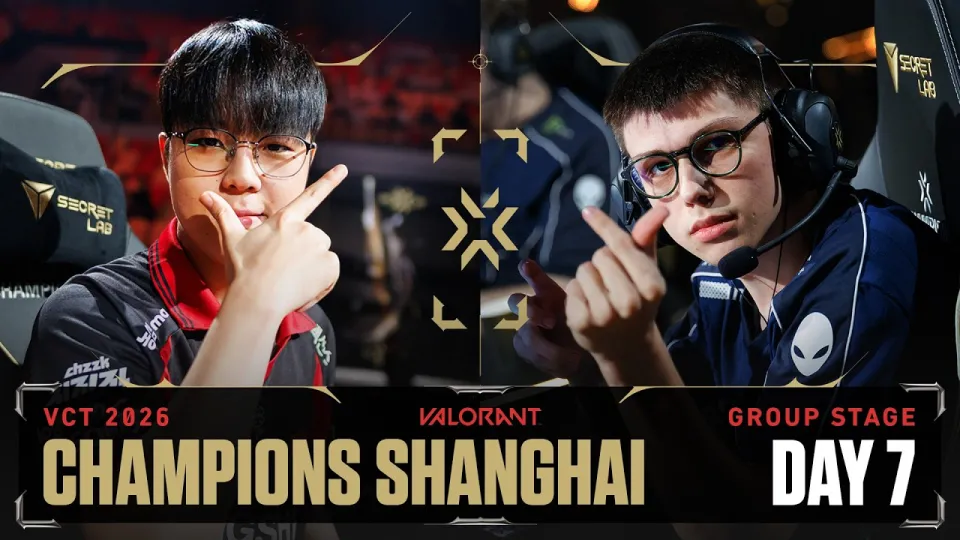
Video: VALORANT Champions Shanghai — Group Stage — Day 7
You can order the same kind of articles for your own video to boost it on YouTube and Google. Just message the Telegram bot @sat_sit_bot. It writes articles around your video, embeds the video and publishes them on popular niche websites (no ads). Free trial — 50 articles.
· based on the channel VALORANT Champions Tour
VALORANT Champions Shanghai is the final and biggest event of the 2026 VCT season, where sixteen teams from Americas, CN, EMEA and Pacific fight for the world title between September 24 and October 18. Day 7 of the group stage, published by the VALORANT Champions Tour channel on October 1, 2026, captured the middle of that race — and the broadcast's own problems. Official updates and clips from the event are posted through the VALORANT Esports account on X.
The group stage matters more than it looks: at Champions, a single best-of-three can decide whether a team plays another week in Shanghai or flies home before the playoffs bracket is even drawn.
What the Day 7 broadcast covers
Day 7 is a full group-stage matchday, not a highlight reel, and it is built around a handful of best-of-three series that move teams up or down the standings. The stream runs for hours, mixing live matches with analyst desk segments, player interviews and sponsor breaks. Because the group stage uses a fixed schedule, viewers who open the VOD without spoilers can still follow the results in order — which is why the top comment on the video is a request for a spoiler blocker with timestamps.
The broadcast is also where the season's storylines converge. Two different teams lifted Masters trophies in 2026, and the Champions group stage is the first place where those winners, the regional runners-up and the qualifiers from China all share one bracket.
Format and what is at stake in Shanghai
Champions uses a sixteen-team field split into four groups of four, with each team playing the others in its group in best-of-three series. The top two teams in each group advance to the playoffs; the bottom two are eliminated. Playoffs then switch to a double-elimination bracket, with the lower bracket offering a second life but no room for a second loss.
That structure shapes how Day 7 should be read:
- A 2-0 team is playing for seeding and a cleaner playoff path, not survival.
- A 1-1 team controls its own fate and usually needs one more win to advance.
- An 0-2 team is effectively in elimination mode and must win out to stay alive.
- Map differential matters as a tiebreaker, so 2-0 sweeps are worth more than 2-1 wins.
The prize is the 2026 VALORANT World Championship title, the largest trophy on the calendar and the one result that defines a roster's legacy regardless of what happened at Masters.
Tech pauses and broadcast friction
The most repeated complaint around Day 7 is the number of technical pauses, with viewers describing an "endless series" of them and asking why so many stoppages occurred. In a live server environment, pauses usually come from one of a few sources: a player's peripheral or PC issue, a server or connection problem, or a dispute over a round that requires referee review.
For viewers, the practical effect is uneven pacing: a series that should run about two hours can stretch well past that, and the VOD becomes harder to navigate without timestamps. For teams, a pause is a momentum reset — a squad that just lost a clutch round gets time to regroup, while a team on a run has to sit and wait. Production teams typically fill the gap with replays and desk analysis, but repeated pauses in one matchday are a legitimate broadcast-quality issue, and the reaction in the comments shows it is noticed.
Why Chinese teams drew criticism
The Day 7 comments include unusually harsh criticism of the Chinese representatives, focused not on raw aim but on decision-making. Viewers pointed to lost eco rounds, thrown 5v2 advantages and predictable utility usage, arguing that the teams look lost once their prepared set strategies stop working. One comment went further, claiming there are stronger teams in other regions that never qualified for Champions at all.
That last point is a fair debate rather than a fact. China's slot allocation at Champions is guaranteed by the regional system, so the teams present are the ones that earned CN's places, not necessarily the strongest sixteen rosters in the world by eye test. What the criticism does capture is a real pattern in international play: teams that rely on scripted executes can struggle when an opponent forces improvisation, and eco-round losses are the cheapest way to hand a map away. Whether that is a structural gap or a single bad matchday is exactly what the rest of the group stage is meant to answer.
Players and storylines to track
Individual form is the other thread running through Day 7. The comments single out veteran leadership as the difference-maker in tight series, and that tracks with how Champions group play works: on long matchdays, the teams that close 5v4 and 4v3 situations cleanly are usually the ones with a shot-caller who has been in elimination matches before.
Three things are worth watching as the group stage finishes:
- Clutch conversion: which teams win the retake and post-plant situations that decide close maps.
- Utility discipline: saving smokes and recon for the execute instead of burning them on default contact.
- Map pool depth: a team with only two comfortable maps becomes predictable in a best-of-five playoff series.
A single standout performance — a Yoru clone play that briefly confused even the viewers, as one timestamped comment notes — can win a map, but only roster depth wins a bracket.
Common viewer questions about the group stage
Group stage confusion is normal at Champions because the format, the schedule and the broadcast all change from the regular season. The most frequent questions are about how teams advance, why pauses happen and how to watch without spoilers.
On advancement: two wins in a group of four is usually enough, but tiebreakers can come down to head-to-head results and map differential, so a team's position is not final until every series in its group is complete. On spoilers: the VOD is ordered chronologically, so scrubbing forward reveals results — community timestamp lists exist precisely to let viewers jump between maps without seeing scores. On the schedule: matches are spread across the full September 24 to October 18 window, with playoff rounds packed into the final days.
Useful links
The official channels carry the live schedule, bracket updates and clips from Shanghai:
- VALORANT Esports on X — results, announcements and match-day updates
- VALORANT Esports on Facebook
- VALORANT Esports on Instagram
- VALORANT Esports on TikTok
- VALORANT on Twitch — live broadcast
The bigger picture after Day 7
Day 7 is a checkpoint rather than a verdict. The group stage in Shanghai is doing what it was designed to do: separating teams that can adapt mid-series from teams that only win when their prepared playbook lands, and exposing broadcast issues that a tournament of this size cannot afford. The criticism aimed at the Chinese squads is a fair talking point but not a closed case — the remaining group matches and the double-elimination playoffs are where a roster actually proves its level. Two Masters titles were handed out in 2026; only one team leaves Shanghai with the trophy that settles the year. For the full schedule, bracket and match-day updates, follow the official VALORANT Esports account on X, and watch the Day 7 VOD on the VALORANT Champions Tour channel, whose broadcast this breakdown is based on.
Key takeaways
- VALORANT Champions Shanghai runs from September 24 to October 18, 2026, with sixteen teams from Americas, CN, EMEA and Pacific.
- Day 7 of the group stage aired on the VALORANT Champions Tour channel on October 1, 2026.
- The broadcast drew repeated complaints about tech pauses, with viewers joking about an "endless series" of them.
- Chinese teams took heavy criticism from viewers for losing eco rounds and 5v2 situations.
- Two different Masters champions in 2026 set up Shanghai as the decisive tournament of the year.
Source: VALORANT Champions Shanghai — Group Stage — Day 7 · Markdown version
Questions & answers
How many teams are at VALORANT Champions Shanghai?
Sixteen teams compete, drawn from the Americas, CN, EMEA and Pacific regions. They are split into four groups of four, and the top two teams in each group advance to the double-elimination playoffs.
Why were there so many technical pauses on Day 7?
Pauses in a live server usually come from player hardware or peripheral problems, connection and server issues, or referee reviews of a disputed round. The broadcast does not always explain each one on air, which is why viewers reacted so strongly to the repeated stoppages.
How can I watch the Day 7 VOD without spoilers?
The VOD is ordered chronologically, so any forward scrub reveals results. Community timestamp lists, including spoiler-blocker comments under the video, let you jump straight to a specific map or series without seeing scores from later matches.
Are the Chinese teams really the weakest at Champions?
That claim comes from viewer reaction, not from the format. China's slots are guaranteed by the regional system, so the teams present earned CN's places rather than being selected as the sixteen strongest rosters globally. Their group-stage results, especially lost eco rounds and thrown man advantages, are what fueled the criticism.